























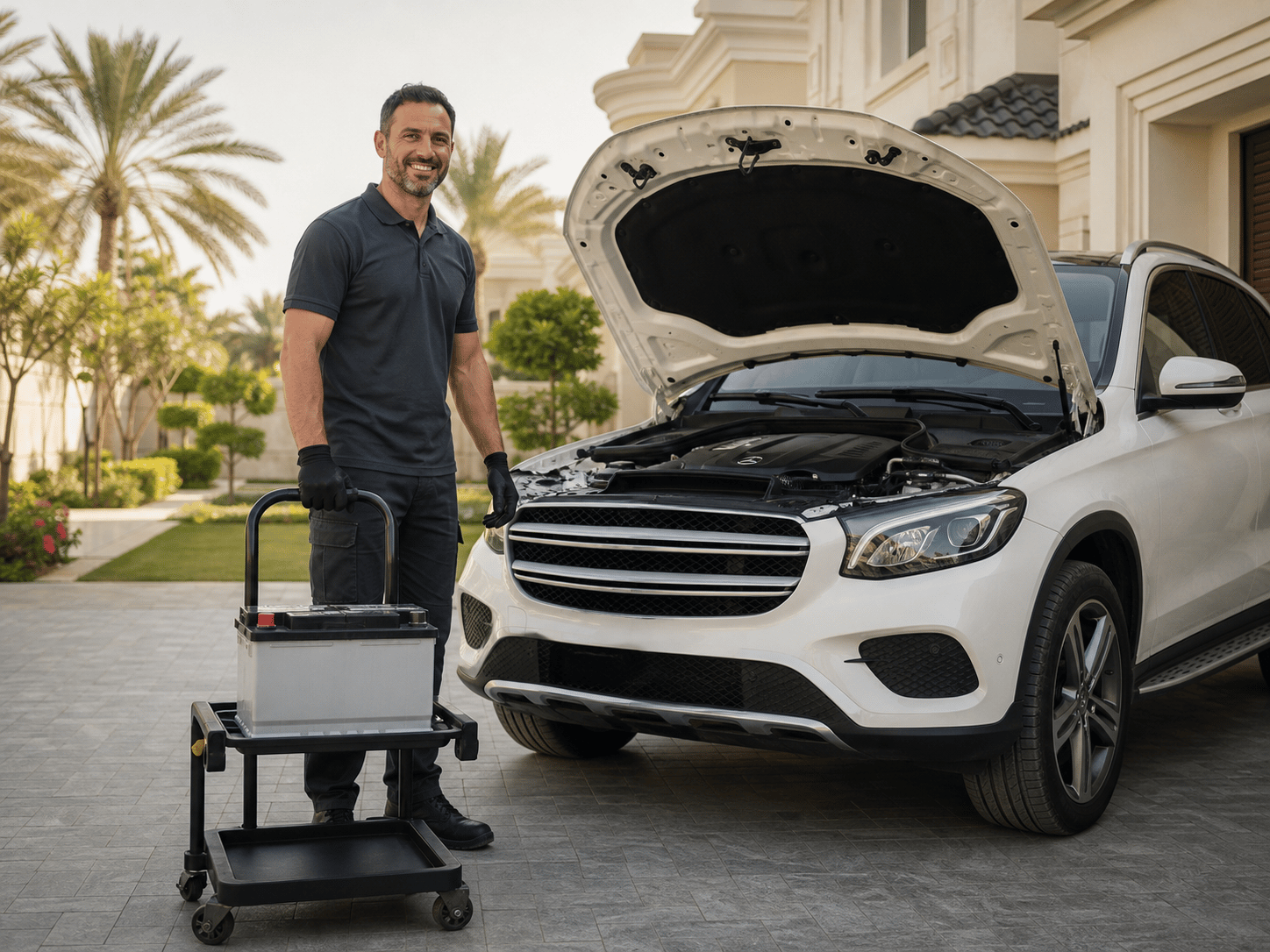
Vehicle recovery coordination in DIFC
Arrange suitable transport when the car cannot be repaired or driven safely at its current location.
What to expect
Recovery from DIFC needs the right access information, especially for underground parking and low-clearance vehicles. Share the car model, whether it rolls and steers, the parking level and the intended destination so equipment and access can be confirmed.
Tell us if you notice these signs.
- The vehicle cannot safely continue under its own power
- The fault requires workshop equipment
- Access or damage prevents a normal roadside repair
Discuss these with the team.
- Vehicle and parking-access review
- Transport method and destination confirmation
- An agreed recovery quotation before dispatch
Have these details ready.
- Car model and whether it rolls, steers and selects neutral
- Pick-up point with parking level and height clearance
- Destination address and who will receive the car
How this service is arranged.
- Share where you are and what happenedA location pin, the car model and a short description let us judge what help fits.
- Agree the help and the priceWe confirm what is available now, the price and a current arrival estimate before anyone sets off.
- Assistance on site or onward transportThe agreed help is carried out at the car. If the fault needs a workshop, the destination and handover are arranged with you.
A few things you may want to know.
If your situation is different, describe what the car is doing and where it is parked.
Can a car be recovered from a basement car park?
Often, but ceiling height and ramp angles decide which equipment can enter. Share the clearance and level so the right vehicle is sent.
Do I need to be with the car?
Someone must hand over the key and confirm the destination. If that is not you, tell the team who will meet the driver.
Send the pin. We'll take it from there.
Your car model, parking level and a location pin help us bring the right equipment. We confirm the price and arrival estimate before dispatch.