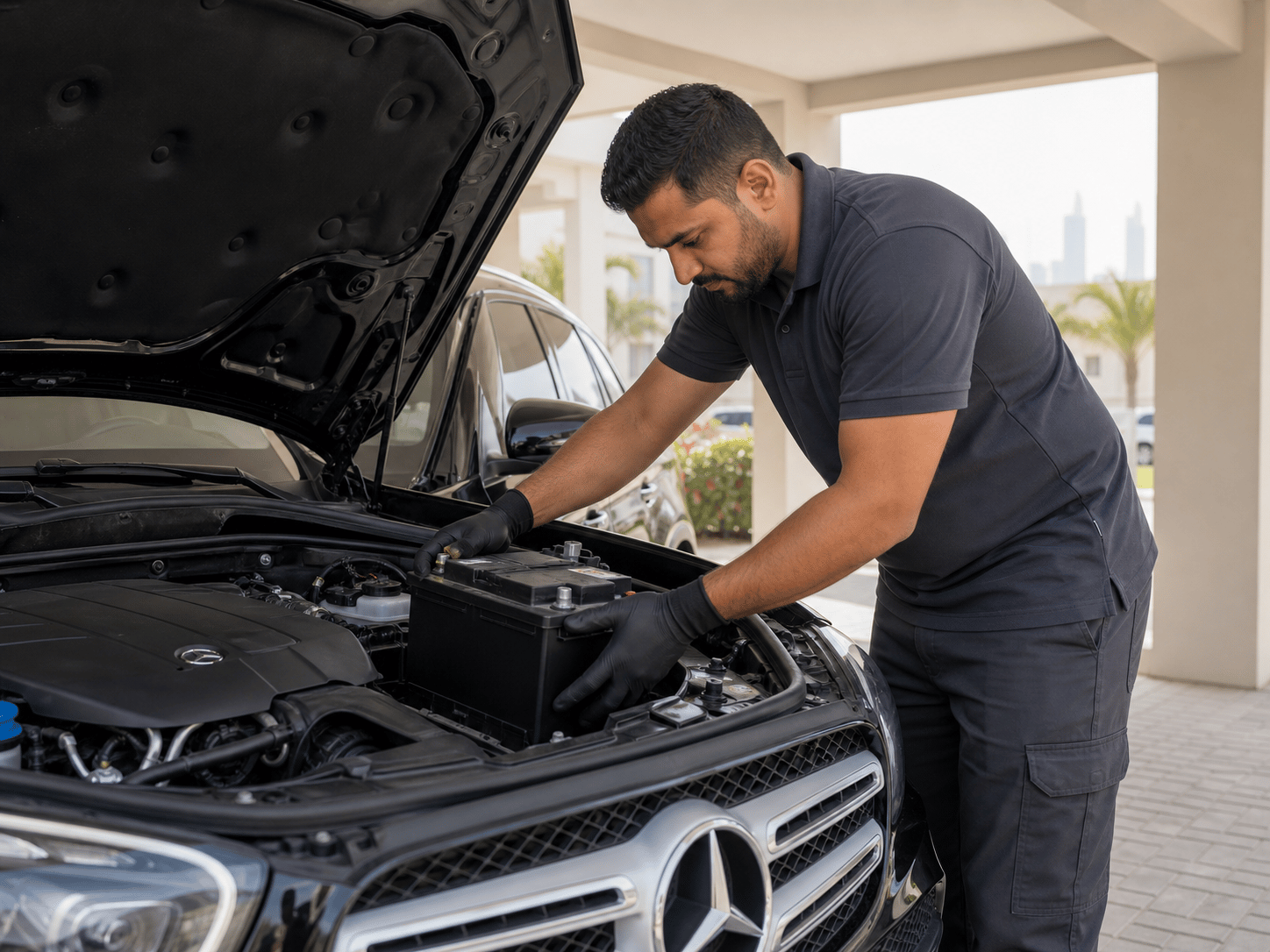












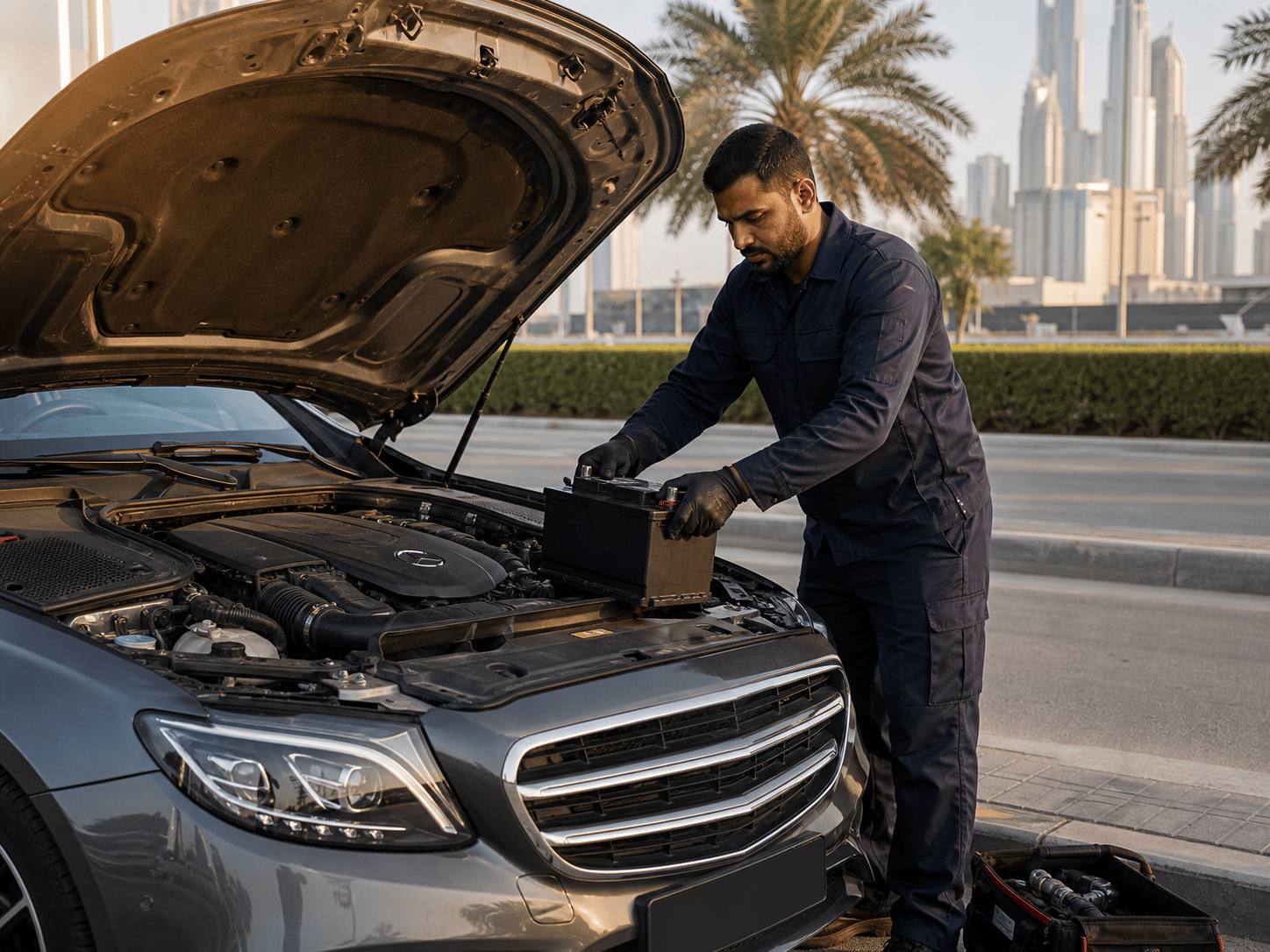















Battery replacement
We check size, terminal position and the required battery technology before arranging a replacement. AGM and EFB requirements are confirmed for your model.
DIFC · Mobile car battery replacement
Battery trouble between meetings? Send your car details and DIFC parking location. We’ll help arrange testing and a replacement that fits.
Keep your working day on track. From Gate Avenue to your tower’s parking bay, arrange battery testing and a correctly matched replacement at your car. Share your vehicle details and access instructions to get started.
Check the battery · Confirm the price · Fit and test



Pick your make, model and year. We’ll take it from there on WhatsApp.
Choose your make, model and year to continue on WhatsApp.
Tell us what’s wrong with the car. We’ll tell you which service you need and confirm the price and arrival time before we come.
We check size, terminal position and the required battery technology before arranging a replacement. AGM and EFB requirements are confirmed for your model.
If the battery has discharged, ask about a jump-start and condition check. The next step depends on what caused the discharge and whether the battery holds its charge.
Slow cranking, dim lights and repeated flat batteries call for a closer look. Battery and charging checks help distinguish a worn battery from a different electrical problem.
The visit includes the agreed installation and starting checks. Ask about battery registration where your car requires it, and confirm collection of the old battery when booking.
DIFC Battery is a mobile car battery replacement service for drivers who work in, live in or visit Dubai International Financial Centre. A technician comes to your parking bay, so a car that will not start does not need to be moved.
Cars around DIFC spend long hours parked, then make short trips with the air conditioning on. Add Dubai summers, and a battery often wears out sooner than drivers expect.
Alarms, trackers and keyless entry draw a little current around the clock. A car left parked while its owner travels can drain a tired battery in days.
Heat speeds up the chemical wear inside a battery, even when the car is not being driven. An open bay in direct sun adds to it.
Running the air conditioning hard in slow traffic on Happiness Street keeps the electrical system busy, so the battery rarely gets a full recharge.
A battery a few summers old can still start the car and be close to failing. A test shows where it stands before it leaves you stuck.
Testing comes first. If the battery is still healthy we tell you, and a replacement is suggested only when the result supports it.
Gate Avenue, Gate Village, ICD Brookfield Place and the towers around them all have different car parks and access rules. Send us these details so the technician can get to your car.
A tower’s reception pin can lead to the wrong side. Include the ramp, street or valet entrance used by vehicles.
Basement signal can be patchy. A parking-ticket photo or written bay number helps when a live pin stops updating.
Tell security or the valet desk about the visit. Mention height limits, restricted service hours or an unattended vehicle when you contact us.
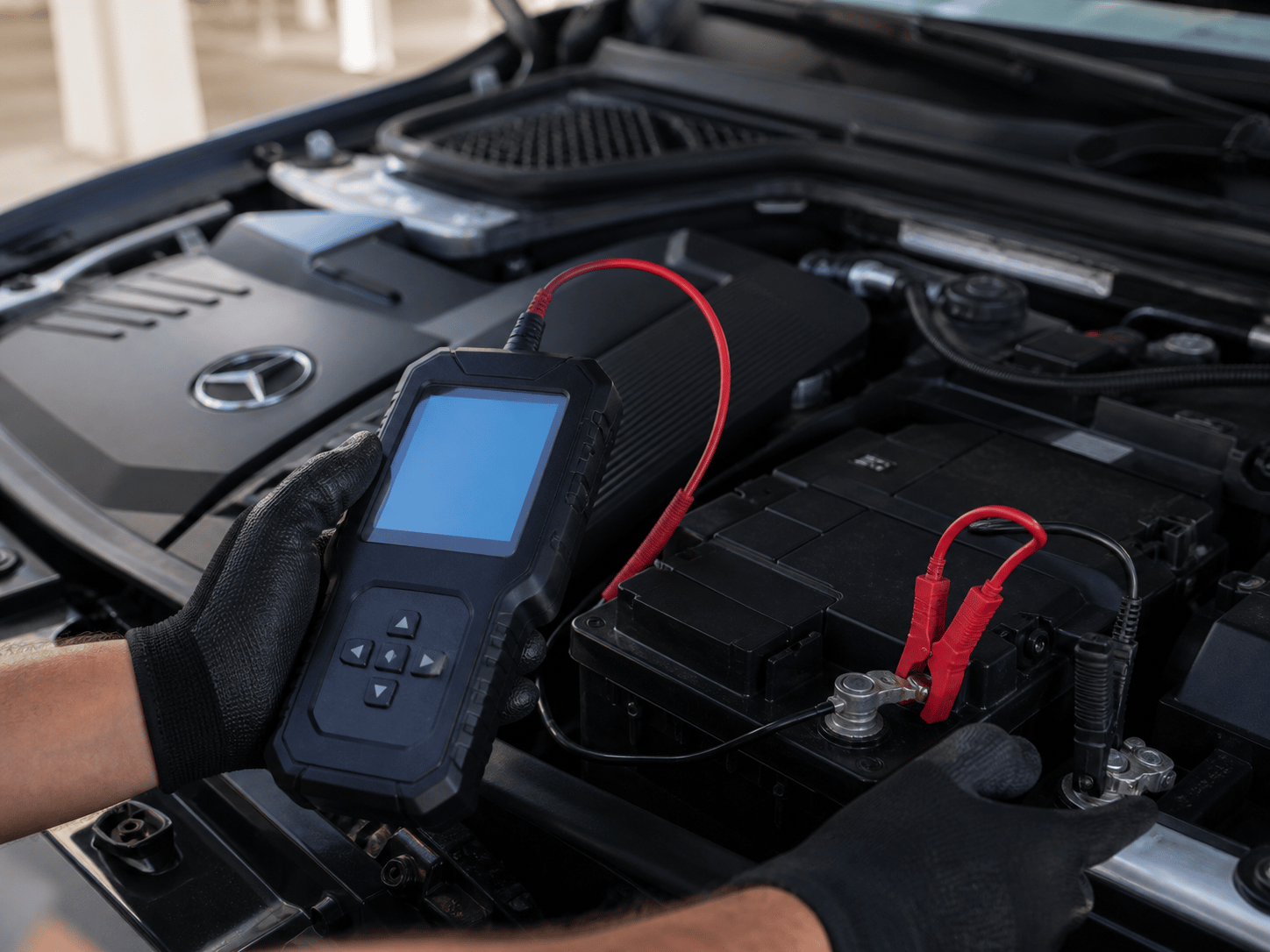
Wherever the car is parked, the visit follows the same order: test the battery, fit a replacement if it is needed and agreed, then check that the car starts and charges.
Staff and visitor car parks. Agree who will meet the technician and approve the work, then carry on with your day while the battery is checked.
Resident basements and podium levels. Send the tower, level and bay number, and tell building security that a service visit is expected.
The valet desk knows where the car is and holds the key. Let the desk know about the visit so the technician can be taken to the car.
Keep your parking ticket and note the zone and nearest vehicle entrance. A bay number is what brings the technician to the right car.
If you notice any of these, mention them when you call. It helps the technician find the fault.
A slower start after work, a clicking sound or repeated low-voltage warnings deserve a battery check. A warning light alone cannot confirm which part has failed.
Dubai heat adds strain to a battery over time. Covered parking helps reduce direct sun, but does not undo age, electrical drain or a poor connection. Check a battery that has become unreliable.
Repeated starts and short drives between offices, shops and home may not replenish the energy used. If the car sits for long periods, ask about an appropriate maintenance-charging plan.
A new battery cannot fix every drain or charging fault. If the car goes flat again, note when it happens and any accessories left connected. Arrange diagnosis instead of repeated jump-starts.
A flat battery rarely happens somewhere convenient. These are the situations drivers describe most often, and what to send us in each.
The car sat for a few hours and now only clicks. Send the level and bay number. The technician tests the battery first, then a jump-start or replacement follows from the result.
Back from travel to a car that has been parked for weeks. Sometimes a recharge is enough and sometimes the battery has reached the end of its life. Testing tells the two apart.
The light can point to the battery or to the charging system. If it is safe, park the car and send its location so both can be checked before any part is replaced.
Ask the desk for the parking level and who can give access. Pass both to us with the car model, and agree with the desk how the technician reaches the car.
We coordinate visits to office and residential parking around DIFC, and enquiries from nearby districts. Tell us whether you are at a visitor bay, a private basement or a valet desk so access can be checked.
See DIFC on the mapA landmark helps identify the area; the vehicle entrance and bay number finish the directions.
A battery is recharged by driving. The routes you use every day decide how much charge it gets back.
| Road | What it does to the battery |
|---|---|
| Sheikh Zayed Road | A steady run at speed recharges the battery well. The engine bay then stays hot after you park, which is hard on a battery that is already ageing. |
| Happiness Street | Short, low-speed hops between towers end before the battery has recovered the energy used to start the engine. |
| Al Mustaqbal Street | Peak-hour queues at the junctions mean repeated stops and restarts, which work the starter and battery harder than steady driving. |
| DIFC internal access roads | Ramps, barriers and basement lanes are driven at walking pace. A start-stop car may restart several times before it reaches the street. |
If the engine turns over slowly after a short trip, the battery is not getting enough charge back. That is the moment to have it tested.
A boost may get the engine running, but it does not establish why the charge was lost or restore a worn battery. Follow-up checks matter, especially after more than one failed start.
If the battery can no longer do its job, a matched replacement addresses that problem. The fitting plan should also cover connections, charging checks and any required battery registration.
Most battery work can be done where the car is parked. Some faults cannot. This is how the two compare.
| Compare | Mobile visit at your car | Taking the car to a workshop |
|---|---|---|
| Getting the car there | Not needed. The technician comes to the bay, subject to building access. | Needs a car that starts, or a recovery truck. |
| Work it suits | Battery testing, jump-start, replacement and battery registration where the car supports it. | Alternator or starter repair, wiring faults and anything that needs a lift. |
| Price | The fitted price is confirmed before a technician is sent. | Ask for a figure before the car is moved, and again after inspection. |
| Your time | You stay at your desk or at home. The arrival estimate is confirmed for your request. | Travel, waiting and the return trip. |
| If it is not the battery | We tell you what the test shows and discuss recovery or a workshop booking. | Diagnosis continues on site. |
Batteries tend to fail at the start or end of the day, when the car has been standing longest. Typical arrival within DIFC is 25 to 40 minutes, confirmed when you contact us.
A car that will not start in a residential basement is the most common morning call. Message as soon as you notice, with the bay number, so the arrival estimate can be confirmed early.
The work can take place while you are at your desk. Agree who meets the technician and hands over the key. Do not leave keys unattended.
After dinner or an event, cars are often with valet. Tell the desk before you call so the car can be brought to an accessible bay if needed.
Calls and WhatsApp messages are answered 24/7. Technician availability and building access are confirmed for each request, because some car parks restrict service visits after hours.
Heat is the main reason batteries wear out early here. These habits will not make a battery last forever, but they help you get the most from it.
Shade does not stop a battery ageing, but it removes hours of direct sun from every day the car is parked.
Short trips between office, home and shops do not fully recharge the battery. One longer run a week helps keep it topped up.
A test takes a few minutes and tells you how much life is left, so the decision is made on your schedule and not in a basement at night.
Dashcams and chargers keep drawing current from a parked car. They are a common cause of a flat battery after a trip away.
Try for a few seconds, then wait before the next attempt. If the engine does not start, repeated cranking drains what charge is left.
If the car will stand for weeks, ask about a suitable maintenance-charging arrangement before you travel.
What a replacement costs, which battery a start-stop car needs, how Dubai heat shortens battery life and what to do when the car will not start.
Enquire about recovery, checks and workshop services. The team confirms which work can happen at the car and which needs a garage, together with the arrangements and price.
If your situation is different, tell us what happened when you last tried to start the car.
Share the building, entrance, parking level and any height restriction. We confirm access with you before arranging the visit. Security or building-management approval remains subject to the property’s rules.
Your car’s make, model and year, its present location and the symptoms are a useful start. A clear photo of the battery label helps check the capacity and technology. We confirm the battery option and total before dispatch.
No. A discharged battery, loose connection, charging problem or starter fault can produce similar symptoms. Testing helps decide whether a jump-start, replacement or further diagnosis makes sense.
Contact the team with your location and the time you need help. Technician availability, the estimated arrival and building access are confirmed for your request, including evening or overnight enquiries.
Ask for the warranty attached to the exact battery being quoted, including its duration and conditions. Keep the invoice and supplied warranty information. Cover can differ by battery and application.
Tell the team who will provide access and approve the work. Arrange keys, the parking location and permission with that person or your valet desk before the visit. Do not leave keys unattended.
Your car model, parking level and a location pin help us bring the right equipment. We confirm the price and arrival estimate before dispatch.